Wednesday, 13 July 2016

Announcing Our New MailChimp Integration

As a people-based analytics platform, Kissmetrics ties all behavior back each person's email address.


And today we're announcing a big benefit that marketers will have when they choose Kissmetrics.


In our People Search, you'll now be able to export a list of email addresses to MailChimp. And better yet, you won't have to download or upload any CSVs, the entire process is all done within Kissmetrics!


Here's how.


Adding People to a New Subscriber List


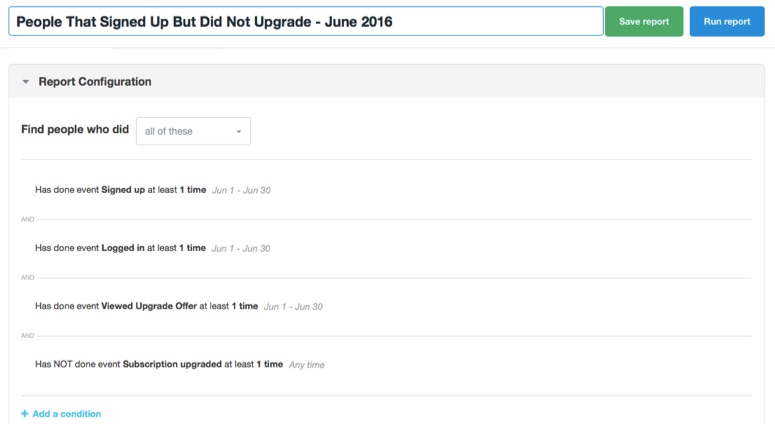
Let's say we're a SaaS company struggling to get people to upgrade to paying after their free trial. We've set up a drip campaign for these customers, now we just need to find who they are and add them to a list in MailChimp. The first step is finding the people that have viewed our upgrade offer but did not upgrade.


We have all the events set up in our Kissmetrics account, now we'll just create a People Search. Here's our criteria:


signed-up-but-didn_t-upgrade-people-search


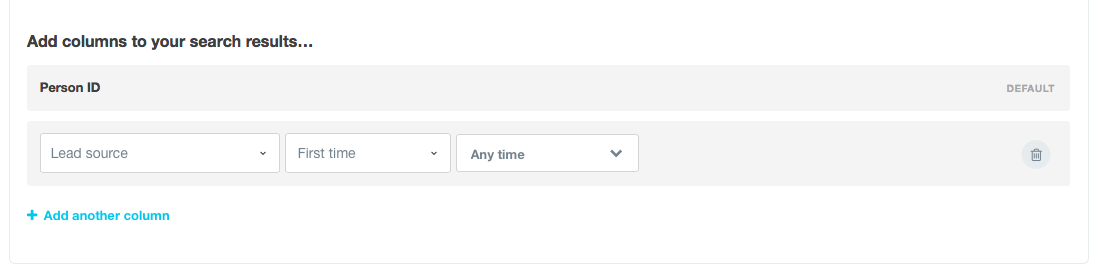
We'll add a column to this data by looking at lead source.


add-columns-lead-source-people-search


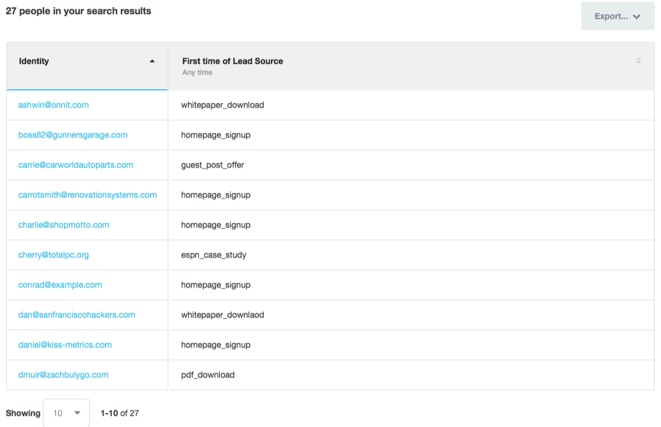
Let's run the report and get our list of people:


list-of-people-search-results-kissmetrics


We'll then click the “Export” button and get a list of options:


export-options-people-search


The first step is to choose the MailChimp list you are working with:


export-to-mailchimp-step-1


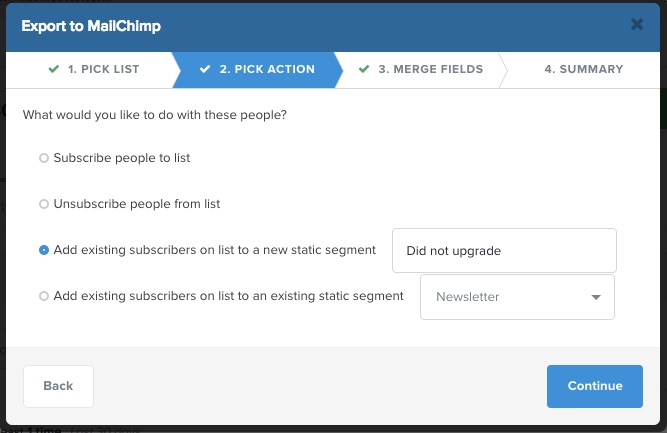
Next we'll choose what we'd like to do with this list of people. We'll add them to a new segment called Did not upgrade.


export-to-mailchimp-step-2


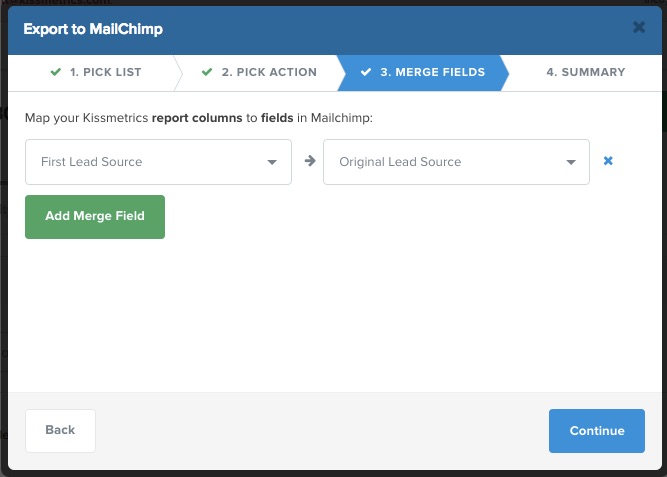
Merge fields are tied to the columns that are added in the People Search. Since we added a column showing their first lead source, we'll add that data to MailChimp.


export-to-mailchimp-step-3


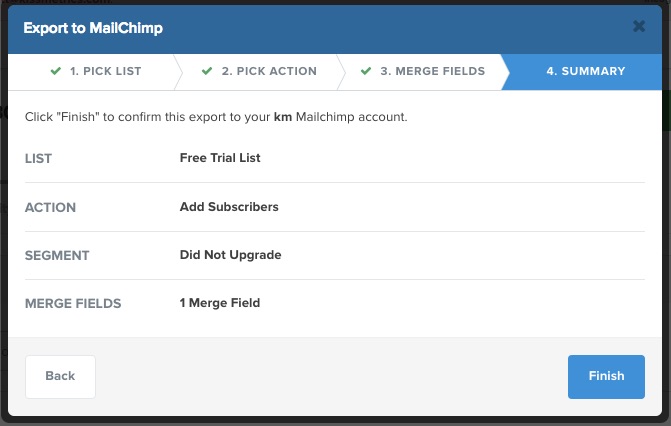
Then we review everything, and if it looks good, we'll click Finish and the data will transfer over to our MailChimp account.


export-to-mailchimp-summary


You can do this with any list you create in the People Search. Here are a few other possibilities for how SaaS and e-commerce companies may take advantage of this integration:


SaaS:


  • People that signed up but have not used a feature

  • Customers that have not logged in for 2 weeks (or any other amount of time)

  • Visitors that downloaded or viewed a marketing asset but have not signed up


E-commerce:


  • People that signed up for a newsletter or registered for an account but have not purchased

  • Customers that purchased in the past but haven't repurchased

  • Customers that applied a specific discount code


As a reminder, this will only work if you identify people by their email address. Usernames, account numbers, or anything else that isn't an email address won't work. And, obviously, you'll need to be a MailChimp customer.


Send More Targeted Email


There you have it. Find a segment of people that you want to move to action, retrieve the list of people using People Search, and then add them to a MailChimp list. This is all done within Kissmetrics and the entire process takes a couple minutes.


If you're a Kissmetrics customer on our Growth plan or above, you can sign in to your account and start using it right away.


If you aren't a Kissmetrics customer but would like more information about how our analytics platform can help optimize your marketing, you can request a demo to learn more.


Tuesday, 12 July 2016

Data-Driven CTAs for Each Stage of Your Sales Funnel

The topic of conversion optimization often revolves around the call to action, with recommendations for improving conversions pointing to variations in shape, size, color, placement on page, copy, etc.


That said, one factor that's often neglected – with sometimes dire consequences – is the relevance of the call to action to the stage of the sales funnel, or what point your audience is at in the buyer's journey.


When your call to action doesn't match the intent of your audience, you're going to see a sharp decline or limited lift in conversions for a given piece of content or landing page.


The Basics of the Call to Action


The call to action (CTA) is an instruction you give to your audience to provoke an immediate response and get them to take action.


That action can be a lot of things: a request to download an eBook, opt-in to an email list, sign up for a webinar, register for an event, purchase a product, take a live demo/product tour, read another article, share, comment, etc.


In some cases marketers will utilize multiple calls to action; however, best-practices state that it's best to only use one call to action to eliminate the paradox of choice. This focuses the audience on that single action you want them to take, rather than split their attention.


Not all CTAs are created equal; it's not enough to just slap a brightly colored “click here” button throughout your funnel. Not only are various elements crucial to the effectiveness of a call to action, but the performance of your CTAs will vary based on their placement throughout the buyer's journey.


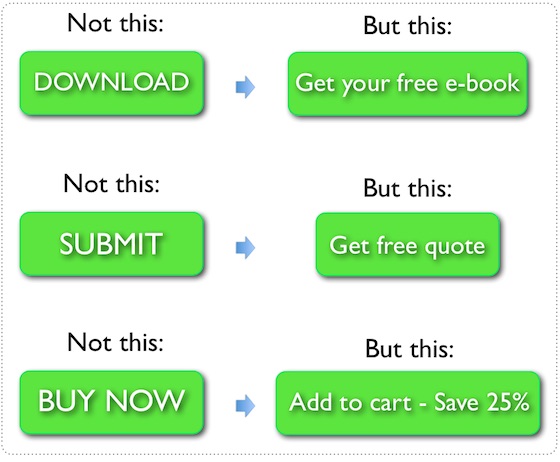
Here's some generic CTAs turned better by focusing on benefits the visitor gets by clicking the CTA:

cta-copywriting
Image Source


A CTA can be placed virtually anywhere in and around your content, but your call to action can't just be placed haphazardly in your sales funnel.


Crafting an Effective Call to Action


Creating an effective call to action starts with the little details. It's easy to create a call to action, but it's far harder to create a call to action that converts well.


Here are some of the most common components that play a part in getting a conversion lift during CTA creation and A/B testing.


The Design


In order for someone to click on a call to action, they first need to see it. Eye-catching designs are helpful, and this is one point where it's OK to step outside of your brand's style guide. You want colors that contrast with the rest of your content and that are large enough to stand out over everything else.


The copy


You can't just tell someone to “click” or “submit.” Your copy should use power words and actionable verbs, often personalized (“you”, “your”, “my”) to have the most impact. Here's a guide to writing CTAs.


The value proposition


Make sure your audience knows exactly what they're getting when they click. Your call to action should be explicitly clear about what comes next, or about what they're getting in exchange for taking an action.


conversion-xl-ctas


Placement in the funnel


A CTA is most effective when it's wholly relevant to the content it's placed in, as well as the user's intent. As such, it's best if it delivers the user to a dedicated landing page relevant to the stage of the buyer's journey, rather than a random website page.


For example, a CTA to a Contact Us page won't be as effective in gathering leads as a CTA that drives the reader to a landing page for a free download.


Likewise, you'd never create a call to action for a product demo (a bottom of the funnel CTA) at the bottom of a blog post when that blog post is providing top of the funnel content meant to drive awareness.


Hitting on all of these components is a critical part of a well-performing call to action. To simplify it, you can break any call to action down into two key concepts – Value and Relevance:


  • The copy of your CTA conveys value and relevance

  • The position of your CTA within the sales funnel reinforces relevance


Fitting your CTA to the Stages of the Sales Funnel


While most funnels will come in three stages, no two funnels are the same. The buyer's journey changes depending on your audience, the product or service, the industry, etc.


Some funnels are very short (B2C online retailers for example) while others are much longer. For example, an enterprise level SaaS like Salesforce isn't a quick purchase. There's often a much longer period of awareness and evaluation before a purchase is made.


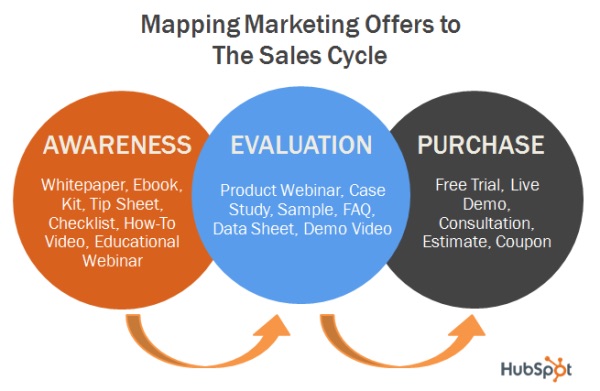
Let's take a look at a typical funnel and the types of content and calls to action at each stage:

hubspot-awareness-evaluation-purchase


Top of the Funnel


The top of the funnel is the awareness stage. You're not here to push or promote any specific product or service. Instead you're offering a broad range of knowledge intended to educate your audience.


They're looking for answers – sometimes specific, sometimes not so specific. Your job is to create content at this stage that captures their attention and provides them with answers.


At this early evaluation stage, marketers typically use long form blog content to grab referral and organic traffic and introduce a brand to the audience. Other types of content at this stage include:


  • eBooks and white papers

  • Reports

  • Infographics


Companies often put a great deal of their marketing efforts into producing a lot of top of the funnel content. And that's a good idea – this type of content marketing can generate 3 times as many leads as traditional outbound marketing, but costs 62% less than traditional marketing efforts.


Blogs are often the most popular; 79% of companies with an active blog report a positive ROI.


At this stage, your call to action needs to focus the attention of the audience. They're not yet a qualified lead or customer, and you don't want to push promotional CTAs or you risk driving them away.


Instead use personalized calls to action that promote continued engagement. This can include:


  • A CTA to drive engagement – “Share this post with your network” or “Leave a comment below with your thoughts”

  • A CTA that gathers info – “Click to get your free eBook” or “Download your free local marketing checklist”


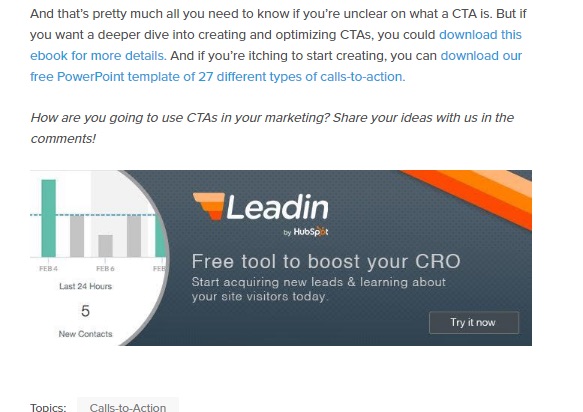
Check out this CTA that Hubspot places at the end of a blog post. It invites people to try out their new tool, with benefits-focused copy:

hubspot-leadin


Remember that the focus here should be on education and continued engagement, with the goal of moving visitors to the middle of the funnel (the evaluation phase).


Middle of the Funnel


The middle of your sales funnel is also known as the evaluation phase. At this point, your audience is aware of your knowledge and offerings. They're committed to finding a solution, but they don't quite know what that is yet. For now, they're simply researching and trying to understand all of the options that are available for solving their problem.


Your goal here is to continue to educate them while also positioning your solutions as the ideal choice.


At this stage, it's not uncommon to use email marketing, segmented by audience and intent, to build a relationship with the audience. Other types of content for the evaluation stage include:


  • Comparison white papers

  • Expert guides

  • Live interactions including webinars


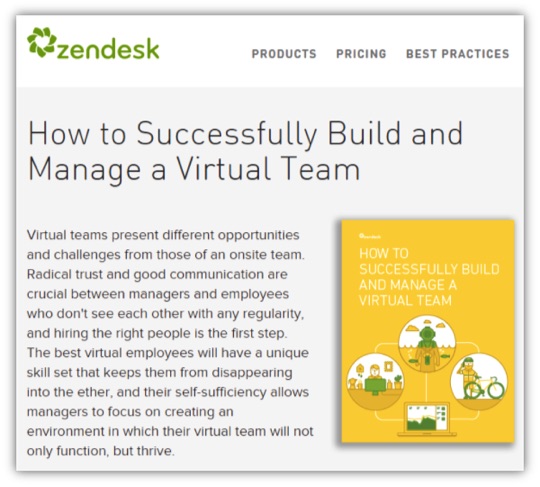
Here's an example of a white paper offer from Zendesk:

zendesk-build-manage-virtual-team


Calls to action in this phase are often extremely focused, with dedicated landing pages. HubSpot, for instance, increased subscribers by 128% in a 90 day period by using blog opt-in boxes on dedicated landing pages. Those CTAs can be made even more effective by narrowing the focus for your audience. As many as 16% of landing pages eliminate navigation to achieve this.


CTAs should focus on relevancy at this stage, highlighting the expert nature of educational information with a strong value proposition.


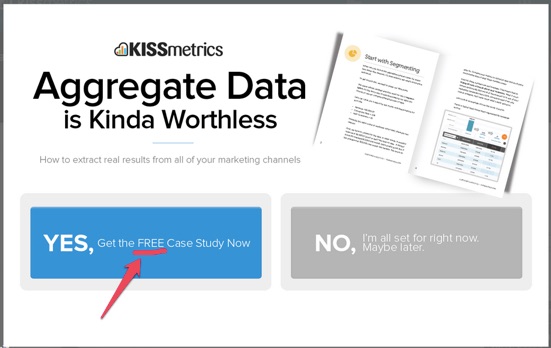
Here's a CTA shown to Kissmetrics highlighting the free case study they'll receive in exchange for an email address.

free-case-study-kissmetrics


Bottom of the Funnel


Just because you've moved your audience to the bottom of the funnel into the purchase phase doesn't mean you're going to close the lead. They're certainly ready to buy, and you want to ensure that they buy from you – but it's far from guaranteed.


Hopefully, at this point, you've mapped content and CTAs to effectively guide your audience through the lead nurturing process. According to HubSpot, nurtured leads produce on average a 20% lift in sales vs non-nurtured leads. Further research from Forrester has shown that companies that excel at lead nurturing can generate up to 50% more sales leads at 33% lower cost.


At this phase, you want to leverage content that persuades your audience to make a purchase. This can include:


  • Trial downloads

  • Demos

  • Infographics

  • Product literature or buyer guides

  • Further case studies


As a result, the most effective CTAs will be personalized based on relevancy and intent:


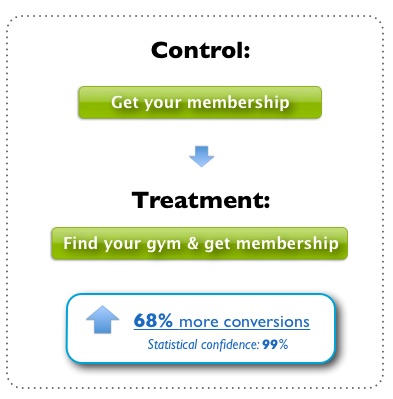
  • “Get your membership access now”

  • “Start your free trial today”

  • “Request your free evaluation now”


conversion-increase-cta-change
Image Source


Conclusion


Creating an effective call to action goes beyond design and copy. It has everything to do with aligning your offer and CTA with your sales funnel to ensure it's relevant to the audience's intent.


Don't stop once your CTAs are mapped appropriately, though.


Setup follow-up content that moves the target back to the middle of the funnel with an appropriate CTA to keep them engaged. Maintain the marriage with the customer and turn them into a lead-generating brand ambassador, using CTAs to inspire them to spread the word.


Do you make CTA placement and creation part of your documented content marketing strategy? Share your approach to CTAs with me in the comments.


About the Author: Andrew Raso is the co-founder and director of Online Marketing Gurus, a fast-growing, award-winning search company working with brands including HelloMolly, Baku Swimwear, and Forcast. Follow him on Twitter at @andrewraso1 or on LinkedIn.

Friday, 8 July 2016

How Much is Bad Data Costing Your Company?

In a world of big data, bad data is becoming more and more commonplace. Part of the issue is fueled by the technology we use to help manage and organize that data. In our rush to be more on-demand, personalized and data-science-powered, we've embraced cloud computing, mobility, social collaboration and enhanced analytics. Every scrap of every shred of customer data is valuable. But in doing so, we've also let our data quality control lapse.


And when departments are clamoring for numbers despite the inaccuracies, it leads to a ripple effect of poor decisions based on those errors. But just how much is it really costing us? And what can we do to stop poor data hygiene before it spreads? Let's take a closer look:


A Company Problem – Not Just an IT Problem


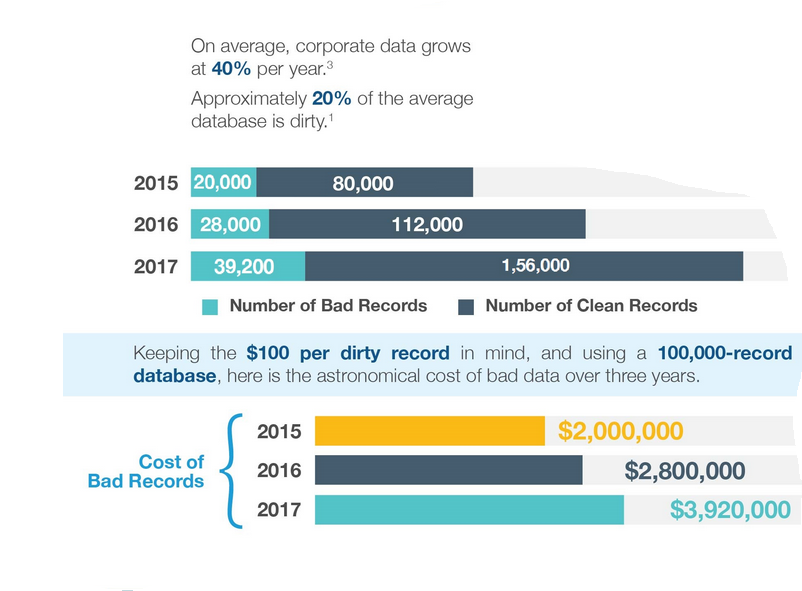
Even just a few years ago, in 2013, the looming spectre of bad data was apparent. Gartner surveyed a wide range of companies in its study and learned that data quality costs them over $14 million dollars a year. Now imagine how much more connected we are today and you can see how the problem could compound exponentially.


bad-data-cost


Source: Ringlead


Many companies, in an attempt to wrangle departments to make sense of it all, place the task of organizing and managing all this information squarely on IT's shoulders. But bad data affects more than just servers and databases – it affects everyone. In this day and age, it is very much a business problem.


And that's not even factoring in the cost beyond customer data. A few inaccuracies in customer names or details is one thing. But oftentimes, depending on the company culture in relation to data upkeep, it can affect other areas of business as well – productivity, security and making cost effective decisions.


In short, this is not a problem we can continue to throw money at and hope it goes away or works itself out.


What Exactly Is “Data Quality”?


Before you begin to get a handle on the data itself, it's important to understand what “it” is. According to another Gartner study, data quality is examined by several different points, including:


  • Existence (does the organization have the data to begin with?)

  • Validity (are the values acceptable?)

  • Consistency (when the same piece of data is stored in different locations, do they have the same values?)

  • Integrity (how accurate the relationships between data elements and data sets are)

  • Accuracy (whether the data accurately describes the properties of the object it is meant to model)

  • Relevance (whether or not the data is appropriate to support the objective)


That's a lot of information to try and clean up “by hand”.


A Portfolio of Options


To help meet the rising urgency of this challenge, there are many data cleansing solutions available. These companies typically look at the big picture of data quality and help to standardize records as a whole. They often source data internally and externally to help maximize relevance and consistency across the board.


As with the other tools in your business arsenal, it's a smart idea to have a portfolio of options available for your data cleansing needs. You may only need a one-time data cleanse to keep your information up-to-date, or you may need ongoing work. Ideally, you'd only need a one-time data quality cleanup if you're migrating to another system or doing a mass marketing campaign. Otherwise if the information isn't tended to often, it can deteriorate and compound problems considerably.

For particularly large or error-prone data sets, a data quality cleansing tool may be set up to run automatically. These types of systems can either cleanse data at specific intervals or notify managers and staff in cases where ongoing data quality monitoring is important.


What to Look For in a Data Quality Solution Provider


Because there are so many options available, and more tools being created all the time, it can feel overwhelming to try and narrow down your options when you're not even really sure what you need. No matter what you ultimately decide, the proposed solution absolutely must be able to:


  • Be able to deliver an immediate impact and noticeable improvement based on the company's current data hygiene state

  • Leverage both real-time information and historical details – customers, staff, products, techniques and processes

  • Have a rock-solid foundation to be able to use new technologies such as predictive analytics, forecasting and modeling

  • Scale and adapt based on the volume, speed and variety of data while keeping everything valid and consistent


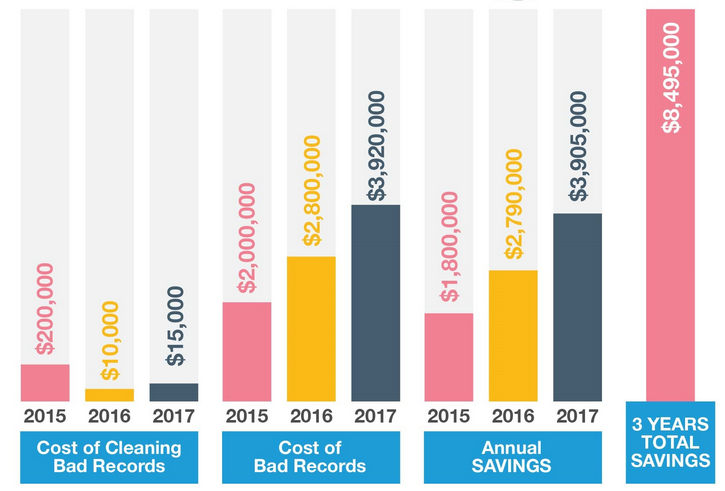
And just as the cost of bad data can continue to multiply year over year, the savings from having accurate data are just as big (if not more-so), as noted in this chart from RingLead:


cost-savings


Source: Ringlead


What a Difference Clean Data Can Make!


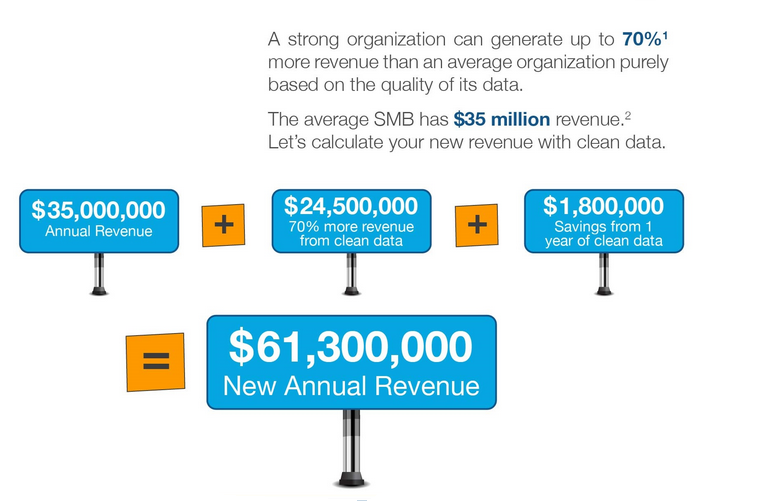
Of course, cost savings are one thing, but oftentimes management (and other executives) don't just want savings – they want to see a direct correlation in terms of revenue as well. The real question is, how much can clean data make for us? Here's a hypothetical (albeit very realistic) example from the same Ringlead chart:


clean-data-savins


And in addition to revenues and savings, the benefits of clean data go much farther. With greater data reliability comes greater credibility and a stronger decision-making foundation backed by data. Reports become more accurate. Customers respond to more accurate personalization. All departments enjoy greater productivity and efficiency. It's a cycle of wins.


So as you can see, a few inaccurate records or non-standardized entries don't seem like a big problem, but as your business scales, more and more information becomes fragmented and fraught with issues. Costs escalate. Efficiency plummets. But by the same token, by spending a little now, you reap far greater benefits over time. And any campaign started or improved based on solid, reliable information is one you can look to time and time again for greater insights and metrics that count.


Do you use a data hygiene strategy in your own company? How has it worked out for you? Have you seen better performance as a result or is the jury still out when it comes to making an impact? Share your stories with us in the comments below.


About the Author: Sherice Jacob helps business owners improve website design and increase conversion rates through compelling copywriting, user-friendly design and smart analytics analysis. Learn more at iElectrify.com and download your free web copy tune-up and conversion checklist today! Follow @sherice on Twitter, LinkedIn or Google+ for more articles like this!


Interview with Barry Schwartz of the Jewish Ad Network

In today's online marketing world, we have become increasingly skeptical about jumping onto that next Ad platform that offers new and improved “bells & whistles” but in reality its just another “me-too” type startup looking to get a piece of market share. However, there is one company that has emerged onto the scene that doesn't promote shiny bells and whistles, but rather harnesses one of the oldest and trusted forms of social media – email marketing. That new Ad platform is called the Jewish Ad Network.


Jewish Ad Network


I had the privilege of interviewing Barry Schwartz, a legend in Search Engine Marketing and CEO of Rustybrick – the parent company behind the Jewish Ad Network (JAN). Barry was kind enough to answer a few questions to help better explain the benefits and the motivations behind his new venture.


Tell us a little about the Jewish Ad Network and why advertisers should consider it as part of their strategy?


The Jewish Ad Network is unique in that it lets advertisers use specific Jewish data in an anonymized manner to do targeting like no other network.  By leveraging our ShulCloud database, we have the ability to let advertisers target a larger population of Jewish users based on their denomination, i.e. reform, conservative, orthodox, etc, or many other criteria.  Advertisers can target based on location, gender, ages, yahrzeit dates or birth dates.


The best part, these ads go directly within the synagogues email communications to their membership. So the emails are highly engaged with and going to an active, receptive and engaged audience.  If you are looking to drive business from the Jewish market, this is an excellent way to do that. There is no such targeting available in any other network, even Facebook or Google.


What motivated you to create this network and what kind of impact do you it will have in the online marketing industry?


Two things motivated us in creating this ad network.  The first is how poor the Jewish advertising world is.  You go to some popular Jewish web sites and you are embarrassed by the bombardment of ads you see everyone, it is virtually impossible to find the content on the site beneath all the ads being thrown at you. We want to make ads on these Jewish web sites better and while we are not at that point now, that is our long term goal.


Second, synagogues are looking for ways to drive more revenues to pay their bills.  Many synagogues these days are barely able to pay their operating costs.  We saw that they were not monetizing key elements of their web sites and emails, so we decided to do it for them and help them earn more money.  It is a win-win situation all around.


How is the JAN different from other Ad Networks and what are the key benefits for advertisers?


As I described before, there is no such targeting available in any other network.  Second fold, the place your ads show up, have never been monetized before by these synagogues.  So they have high engagement and view rates, as opposed to other ad placements that have higher ad blindness.


Jewish Ad Network


From a technical perspective, can you explain how the JAN contextually targets customers Ads across the Shul newsletters.


Since we have user data from ShulCloud, and since we power those emails and web sites, we are able to contextually target the data.  We know that user A has a birthday tomorrow and we are able to let the advertiser target people based on birthdays, without revealing to the advertiser who the user is.  This works a lot like Facebook but we have this information from our membership management database.


Does JAN offer its own Reporting and Analysis? Is it compatible with other Analytics platforms such as Google Analytics?


We do provide both an advertising and publisher dashboard. The advertiser dashboard shows advertisers their clicks, impressions, CTR and cost by day, by campaign by platform.  It is similar to what you'd see in other advertising portals.   The publisher dashboard shows the synagogues how much they are earning by day and their payout reports, similar to Google AdSense.


We do recommend to users to use tracking URLs, either through Google Analytics or their preference analytics software. This way they can set their destination URLs as they see fit and thus track it down to the conversion.


We are living in a Social Media world that is saturated with too many “Me too!” Startups. Does the JAN represent a natural shift back to our earliest form of social media (aka email marketing)?


Well, I believe most marketing agencies would agree that email marketing still does work.  But pairing that based on highly targeted knowledge about who you are sending the ad to can help make the ad, in the email, much more targeted.  So we think pairing social like data and email marketing works very well.


Thursday, 7 July 2016

Stop Overspending Time and Money on Marketing Techniques That Don't Work

I hate to see money wasted on outdated online marketing techniques.


It's not just about money, but also about time and resources that could be used in a better way. Marketing budgets are often tight, and you just can't afford to spend them on strategies or things that don't work.


To help you cut waste and make your marketing strategy more effective, I've created a list of six most common ways small and medium sized businesses lose their budgets online. Here's how to stop overspending time and money, and turn those losses into gains.


1. Using “Guaranteed SEO Services”


SEO is not an exact science and getting results overnight is a myth. Google's algorithm has become smarter and smarter in the last years and there are no easy shortcuts. It's commonly known that Google uses hundreds of ranking factors, but the truth is that no one knows precisely what all of those are. With time, you get to learn what techniques work better, but anyone that offers guarantees to rank a site on the 1st position for a particular keyword is a scammer.


Google warns people not to buy SEO services from companies or freelancers that guarantee to rank 1st for any given keyword. Here's Google's take on guaranteed SEO:


google-seo-firm-warning


If you are not experienced, you might be tempted to choose an SEO company that guarantees you'll rank first for your main keywords over a company that doesn't offer this guarantee. Makes sense, right? But it doesn't.


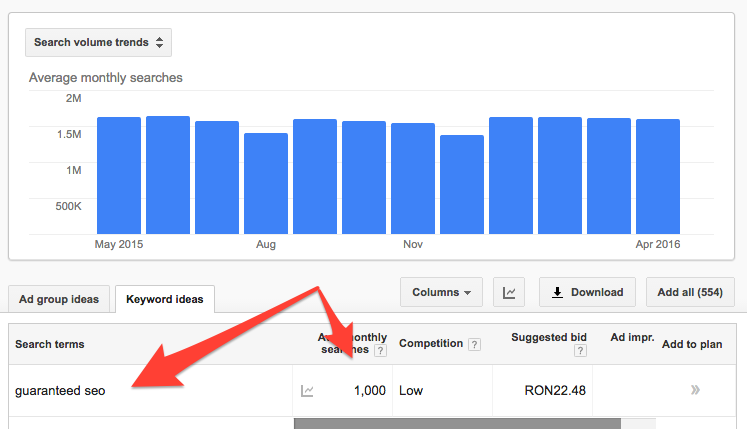
The SEO companies that offer such guarantees are commonly formed by black hat SEOs that are not fully committed to making your website successful. They are just fine with taking your money for 3 or 6 months, and don't care so much that eventually you'll leave disappointed. That's because at least 1000 of potential new clients search in Google each month for “Guaranteed SEO”. They can easily find another naive person to sell them guaranteed SEO services and replace your contract.


search-volume-trends


Be very picky and skeptical when choosing an SEO firm. If you don't know where to start, Moz has a list of recommended SEO companies.


2. Buying Social Media Followers


The number of followers you have on social media is simply pointless. What matters is the engagement and how many real users see your posts. It's not like in your childhood when it mattered if you or your brother had a bigger portion of goodies. Many fall into the trap of believing that the more followers their business has, the more trusted and reputable it will be.


You should never buy social media followers. Neither on Facebook, Twitter, Pinterest or whatever social media platform you choose to use for your sites. Bought “followers” are fake and besides being a waste of money, you can also end up having your account suspended.


3. Not Measuring The Success And ROI For Your Marketing Campaigns


All businesses and industries are different and therefore what works great for some, might not work as good for others. For example, social media can be a golden nugget for sites in the entertainment or technology industry, but for a business that sells forklifts will not be as important. Just because a channel works great for most sites doesn't mean that you should block your resources on something that's not suitable for your type of business.


To succeed with online marketing, you have to analyze and measure the success of all your campaigns and then focus most of your attention on the channels that give the best return of investment. Use an analytics tool like Kissmetrics to see where your site traffic is coming from and check how the visitors are funneling through your website.


It's critical to measure how well your marketing campaigns are performing and know what you should prioritize for the future. If social media doesn't work well for your site, you can focus more on creating quality content, or maybe launch a better advertisement campaign.


The most common mistake marketers tend to do is not to measure their campaigns and sources of conversions on a regular basis. It's not enough to check what works best for your site once and then take decisions upon what you've discovered on that analysis. Each week, marketers should check what worked best and how the conversions are going for each channel. Marketers can do all of this within Kissmetrics.


4. Content Marketing Done Wrong


The interest for content marketing has grown to unexpected levels in the last years. It's estimated that the whole industry is worth roughly $190 billion and it will grow to $300 billion by 2019.


content-marketing-interest-overtime


Content marketing is about creating content in the form of videos, articles, infographics, images, slideshows, etc. With the industry growing so quickly, the competition is also becoming stronger and stronger. Quality is the differentiator between a good and a bad content marketing campaign.


The main reasons why most of your content marketing campaigns fail is because:


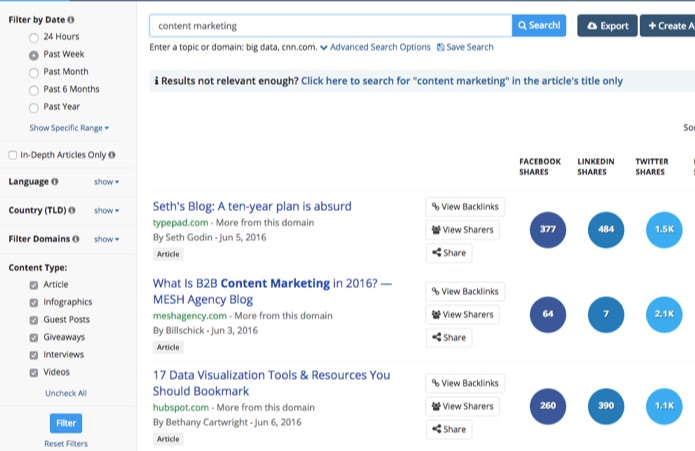
  • You don't write about topics that people are really interested in. Sure, it's your blog and you can write about whatever you want, but if you are aiming to get more visitors, you have to research your topics. With the help of BuzzSumo, bloggers can find what content from other sites is performing great on social media. It's a simply way to finding what works best for your competitors and what gets the most shares. The tool gives you access to an endless resource of topic ideas.

    content-marketing-buzz-sumo


    It's also a good idea to check what key phrases people use to do searches in Google. For that, Google's keyword tool can be very handy.

  • You don't promote the content campaigns you have created. It's not enough to write an article, video or build a great infographic and then move on. Just because you've clicked the “publish” button, it doesn't mean that your job is over. Not even close. You can't just create some content, and hope that it will go viral. Things don't work that way. Chances are nobody will ever find your new piece of content, unless you try to promote it. Do outreach and try to promote the content through influencers.

  • You content marketing campaign has no value. You see low-quality content marketing campaigns everywhere. If the content you've created doesn't bring value to the reader, don't bother publishing it. Instead of posting 10 useless articles or videos, try to make one that will stand out as the best in the niche.

    It's the same with guest blogging. There's no point to write for sites that have no authority and no one has heard about them. Don't spend your time and budget to write for several low-quality sites, but instead aim to be a contributor on the big sites in your industry.


5. Not taking backlinks seriously


Backlinks are important not just for SEO, but they can also send relevant referring traffic, help you build partnerships, bring you customers, and measure the success of your online marketing campaigns. Sadly, many tend to ignore backlinks and rarely check the ones of their site.


If you are running a content marketing campaign or simply doing outreach to promote your website, besides checking analytics, it's also important to check your site's backlinks. That's so you can know whenever a site links back to you and see how successful was your outreach campaign. If your content marketing campaigns are not generating quality links, you might have to reconsider your strategy.


Here are several reasons why everyone should pay more attention to backlinks:


  • Backlinks are the main ranking factor for Google and Bing and they will continue to be for the coming years. A site that has good backlinks will rank higher for more related keywords and get more traffic from search engines.

  • Bad backlinks acquired naturally or because someone has built them to your site can drag your site down in the SERPs. It's important to know whenever your site gets new backlinks or otherwise all your SEO efforts will be pointless and you'll end up wasting time and money.

  • Backlinks can tell you when a blogger sends a link to your site. You can thank them for recommending your site, and perhaps build a partnership with them.

  • Backlinks can show what websites are referring the most traffic to you, and you can try to get more of the same.

  • If you are buying ads through banners, it's important to know if the advertiser removes the backlink.


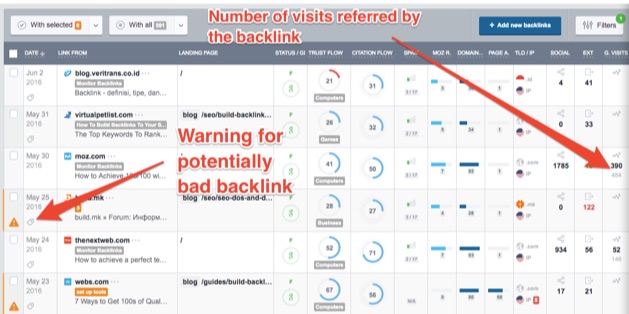
To be up to date with all your site's backlinks, you can use the SEO Tool Monitor Backlinks, which sends you an email whenever your earn or lose links. Besides the email alerts, the tool shows more than 15 different metrics for each backlink, to help you easily see in a glance their SEO quality. Another useful feature is the warning sign that is showed for links that have questionable metrics.


seo-tools-monitor-backlinks-screenshot


To prevent organic traffic loss, it's advisable to often check your site's backlinks. SEO is one of the best online marketing channels that can generate traffic, even if you are in a boring niche. If you've hired someone to do SEO for you, you still have to check your site's backlinks. Don't sit back and think that everything will be alright. Your business responsibility is still in your hands and you are the only one that's going to lose in case something goes wrong.


One of the worst mistakes people tend to do about backlinks is thinking that they need hundreds or thousands of links to rank high in Google. All that matters is QUALITY. The number of links you have is not important and you shouldn't be obsessed about it. It's best to have 10 quality links rather than 1000 backlinks from unknown sites.


6. Outsourcing To Bad Companies


As your online business starts to grow, you can start to consider outsourcing some of the tasks to a specialized company. You can outsource social media, content marketing, SEO, advertising management, etc. Whatever you outsource, don't forget that you are still in charge and you can take over if the results are not the ones you expect.


There are numerous cases where companies are outsourcing services to a bad content marketing or SEO firm. However, they keep using their services. That's because when outsourcing, companies tend to rely solely on the reporting provided by the outsourcing firm.


If your results are not close to your expectations, and you have a feeling that your money are being wasted, take action before it's too late.


Conclusion


It's hard to succeed with online marketing without measuring all your channels correctly. Set your KPIs and don't be afraid to change or stop working on a channel that's consuming too much financial and time resources.


Be very doubtful when choosing to work with an outsourcing company and continue to use your own tools to measure the success of their campaigns.


About the Author: Felix Tarcomnicu is an Internet marketer with a strong passion for SEO and social media. You can follow him on or Twitter @FelixTarcomnicu for similar articles.


Monday, 4 July 2016

Want a Bigger Marketing Budget? Optimize Your LTV to CAC Ratio

Almost every head of marketing, whether they are a CMO, VP, or Director of Marketing is thirsty for a larger marketing budget. With more money to spend, marketing can (theoretically) drive more growth.


But all too often marketing budgets are set without much rhyme or reason – there tends to be a huge correlation to how many sales were made in the previous month or quarter, or worse yet they are set as a percentage of the company's revenue. This is particularly common in product driven SaaS organizations. But for growth-oriented companies, these means of setting marketing budgets are simply not serving your growth agenda appropriately.


How much do SaaS Companies invest sales and marketing?


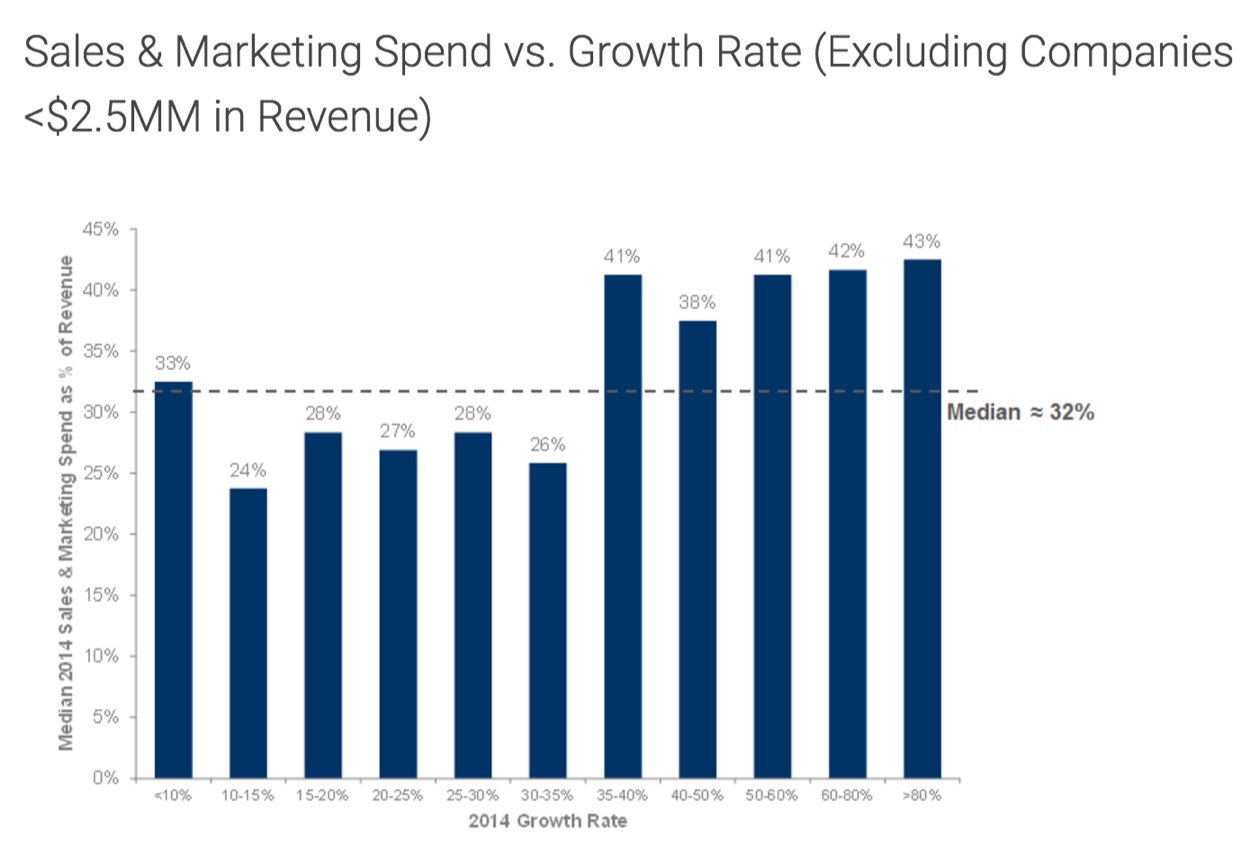
Take the chart below as an example. Based on a sampling of 300+ SaaS companies with greater than $2.5mm in revenue, the median sales and marketing spending as a percentage of revenue is 32%.


sales-marketing-spend-growth-rate-chart
Image Source


Does this mean all SaaS companies should simply set their sales and marketing budgets at 32% of their revenue? Absolutely not. There are a number of companies spending as much as 43% of their revenues on sales and marketing, with these companies achieving growth rates of 80%+.


While some of these companies may be spending so aggressively because they are heavily funded and are looking to capture market share, the companies that are the true darlings of the SaaS space are those that have such a strong ratio between the Lifetime Value (LTV) of their customers and their Customer Acquisition Cost (CAC) that they've built a compelling case to pour more dollars into their customer acquisition engines. They've built Ferraris and have a valid reason to believe that additional sales and marketing spending will keep their growth rates accelerating.


In your quest to obtain access to more financial resources, it's the marketing leader's job to educate the rest of the organization. And simply put, the idea of a “marketing budget” is outdated if growth is truly what you are after.


The Formulas Your SaaS Company Needs


Instead, you have two levers at your disposal – both of which can be optimized, and both of which are not typically considered areas of your business that marketing alone should own. The Lifetime Value (LTV) of your customer is impacted by many factors, including but not limited to:


  • Sales selling to buyer personas that have the best chance of being successful with your product

  • Product organizations delivering truly valuable features that make the product “sticky”

  • Customer success teams working with your clients to make them successful after purchase

  • Marketing developing pricing and packaging that pushes longer term contracts over month-to-month agreements.


The formulas:


Lifetime Value (LTV) = Average Customer Lifetime X Average Revenue Per Account


Average Customer Lifetime = 1/churn rate (expressed in months or years)

Ex: 1 / 5% monthly churn = 20 month average customer lifetime


Average Revenue Per Account (in a given period) = Total revenue /total customers added


So for example, if last month you made $200,000 in revenue from 25 customers, your calculation would be $200,000/25 = $8,000.


And if customers stay with you for an average of 20 months, you multiply 20 x $8,000 and reach the lifetime value of $160,000. So the cost to acquire a customer (CAC) should be no more than $53k. ARPA = $200,000/25 = $8,000


In this example 20 months X $8,000 = $160,000 LTV


Just as there are many ways to extend your customers' LTV, there are also a number of different strategies that you can employ to lower your Customer Acquisition Cost (CAC). Marketing can focus on more cost effective lead generation strategies like organic search, conversion optimization, and developing customer advocates. Sales teams can learn to more efficiently move prospects through the customer acquisition funnel and can do away with expensive events and client dinners in lieu of more cost effective inside sales techniques.


To calculate the cost it takes to acquire a customer, you simply divide the total sales & marketing spend by the number of customers added in a given period. So if you spent $100,000 in a year and acquired 10 customers during that time frame, your CAC would be $10,000.


As a general rule of thumb, a SaaS business with a LTV:CAC ratio of 3:1 is considered healthy – meaning you get $3 in customer revenue for every $1 you spend to acquire them. If you have this ratio or better, you have a customer acquisition engine that is performing well. It is important to mention that this is simply a benchmark – not a magic bullet. This ratio had held up well and provided a valid target at a number of companies I've worked with, but every company's unique situation in terms of funding, growth rate, burn rate, and business goals should be considered. Never put all of your eggs in one basket by looking at any SaaS metric in isolation.


3:1 Ratio is Your Benchmark for a Higher Marketing Budget


With a ratio of better than 3:1, you have a strong argument for investing more money in customer acquisition programs if maxing out your growth potential is your objective. You can make a simple argument to the CEO by saying, “we know that for every $1 we spend to acquire a customer, we get $3 back in revenue.”


So it's the job of the marketing leader to relentlessly look for ways, across the organization, to lower customer acquisition costs and extended the lifetime value of the customer. If you're able to do so, you're making a compelling case for marketing to be given access to whatever financial resources are available, whether you're a funded or bootstrapped company.


In fact, a strong LTV:CAC ratio is one of the most important metrics you can show if you are trying to raise funding. In my opinion, perhaps the most valid reason a SaaS company should raise funding is if they have a very healthy LTV:CAC ratio and their growth is only limited by access to capital.


Gone are the days of marketing leaders waiting until after a big sales month to nervously ask for an increase in marketing budget. And gone are the days of the marketing leader advocating for marketing spending to represent a larger percentage of the company's revenues. Relentless focus on increasing customer lifetime value and decreasing customer acquisition costs will blow the top off or your marketing budget (as it should!) indefinitely.


About the Author: Geoff Roberts is the Vice President of Marketing at Bizness Apps. Bizness apps is an app building platform used by small marketing and design agencies to build mobile apps for small business clients.